
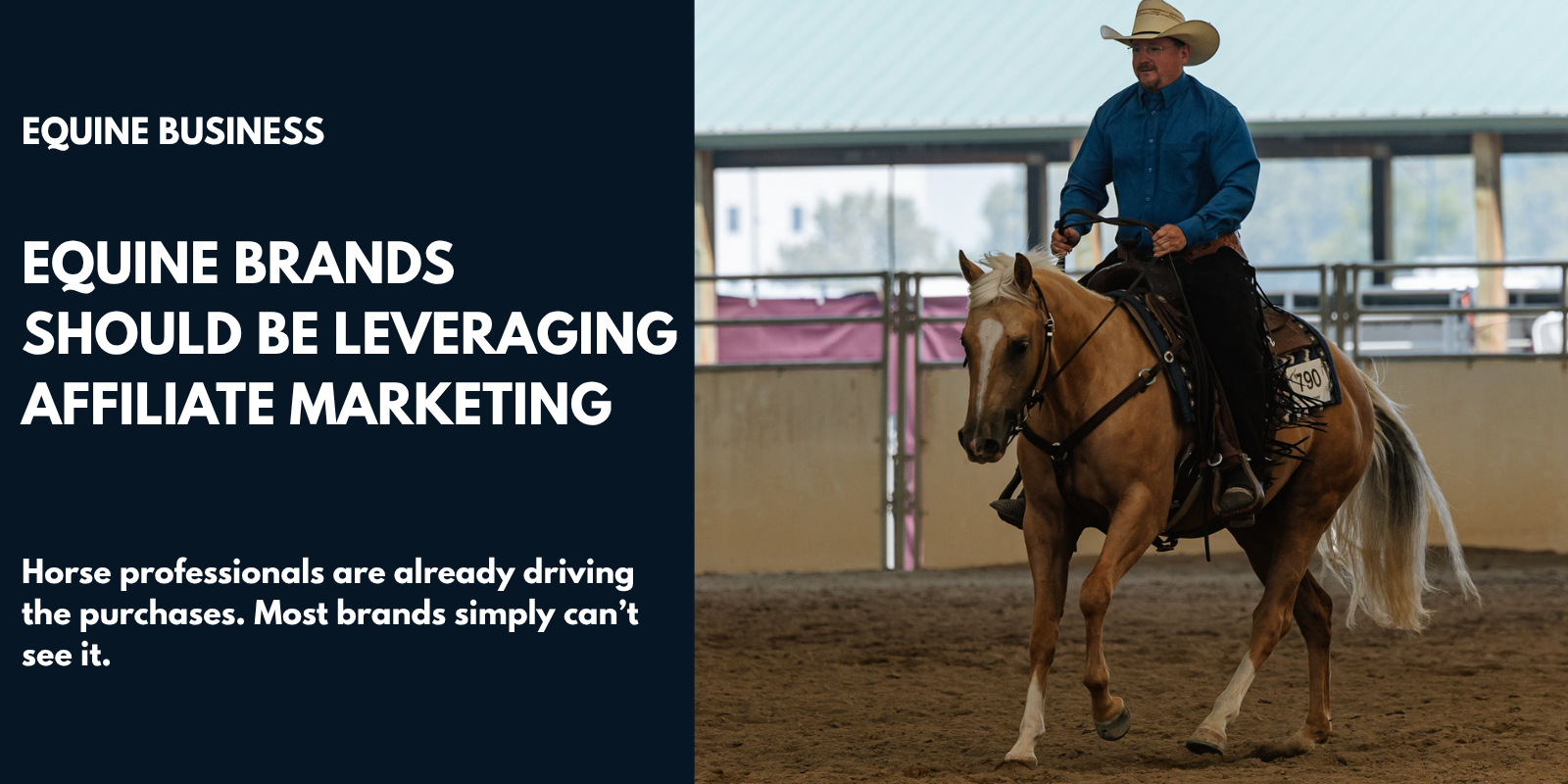
Equine Brands Should Be Leveraging Affiliate Marketing
Why it took so long for this idea to hit me, I don’t know.
Maybe it was because I came to the horse world in earnest later in life. Maybe it was my experience rodeoing in college, where I was often treated like an outsider because I didn’t come from ten generations of rodeo athletes and cowboys.
Whatever the reason, it took a long time.
Then, in July 2023, it finally hit me.
My children’s trainer – who later became my trainer, instructor and coach – rode over to my wife and me while we were getting some relief from the afternoon sun under the awning of our living-quarters trailer.
“Hey,” she said. “Your daughter needs a different bridle setup and a new saddle pad before we go race again.”
“Great,” I answered. “Just send me a link and I’ll buy them on our way home.”
That was how our relationship worked.
I didn’t want to spend hours comparing saddle pads, reading product descriptions or trying to decide which bridle setup my daughter needed. I wanted exactly what our trainer told me to buy.
I didn’t really know what I was doing.
She did.
Just send me a link and I’ll buy it.
I trusted our trainer completely.
But after I said those words, they seemed to hang in the dusty air for a moment. I stared into the middle distance with my head cocked, thinking about what I had just said.
A link.
I had built my entire career around the fact that a link can be tracked back to the person or company that generated a sale. When someone recommends a product, shares a trackable link and produces a purchase, that person can receive part of the revenue from that sale.
That is affiliate marketing.
I had built my career around this exact idea
I spent 19 years running an affiliate marketing agency.
My company worked with brands including Cabela’s, Hilton Hotels, Saatva, Zappos, Coldwater Creek, Bodybuilding.com, CityPASS, Cotopaxi, Country Outfitter, SmartPak, Dr. Squatch and hundreds of others.
Over those years, our teams helped generate more than $3 billion in sales through the affiliate channel.
Affiliate marketing is not some new or experimental idea. I have worked in the industry since 1999. Heck, I even know the person who ran what is widely recognized as the first affiliate program.
Brands in nearly every major industry have used this model for decades.
A website, content creator, shopping site, loyalty program or other partner introduces a customer to a product. The customer follows a trackable link and buys it. The company gets the sale, and the person or business responsible for creating that sale receives a commission.
Yet the horse industry has never fully embraced one of the most valuable groups of people who could participate in it:
The horse professionals standing in the arena, working in the barn and caring for the horses.
That is when it hit me.
The person driving this particular sale wasn’t a shopping site, a coupon site or a traditional social-media influencer.
She was sitting on a horse right in front of me.
The real purchasing influence is already at the barn
Our trainer understood the horse, the rider, the discipline and what we were trying to accomplish.
She knew which equipment we needed, and her recommendation carried more weight than any advertisement a company could have shown me.
That interaction was not unusual.
I can’t tell you how many times I have asked a trainer, veterinarian, farrier, equine chiropractor or bodyworker questions like:
- What bit should I be using?
- Where did you buy that headstall?
- Is a 5 Star pad the right one for this horse?
- What supplement could help improve the health of that hoof?
- Have you found a fly spray that actually works?
- Which show sheet do I need?
- What boots should I use?
- What grooming products do you recommend?
- What do we need to prepare for the show?
- What should I keep in the trailer?
The purchase doesn’t always begin with me asking a question, either.
At least once a week, it seems like my trainer sends me a text explaining that one of our horses needs something.
It may be time to replace a fly sheet. We may need different tack. A supplement may be running low. Something may need to be added to the trailer before the next show.
However the conversation begins, it almost always continues with the same words:
“Send me a link.”
The trainer sends it.
I click it.
I buy the product.
Sometimes I barely notice which retailer I’m purchasing from. The trust our trainer has built carries all the weight.
I’m not unusual in this regard. Horse owners routinely rely on trainers, veterinarians, farriers, bodyworkers, grooms, barn managers and other professionals to tell them which products they should purchase.
Those recommendations generate real economic activity every day.
Most of it is untracked, unrewarded and largely invisible.
Equine brands are benefiting from these recommendations by accident
My family likely spends at least $10,000 each year on products recommended by the professionals who help us care for and show our horses.
That is not an industry statistic. It is simply our household’s experience.
But think about how many times that same basic interaction happens across the horse industry:
A horse owner asks a trusted professional what to buy.
The professional recommends a specific product.
The owner says, “Send me a link.”
The owner buys it.
The brand and retailer receive the sale, but they usually have no idea who actually created it.
There is an enormous amount of purchasing happening because of what horse professionals recommend. Most equine brands are simply benefiting from it by accident.
They aren’t tracking it, so they can’t see it.
They don’t know which trainers are already recommending their products. They don’t know how many customers those professionals are sending them. They can’t properly support the people producing those sales, and they can’t intentionally grow a channel they cannot see.
The recommendation is already happening.
The purchase is already happening.
The missing piece is the connection between the two.
Why traditional affiliate programs haven’t solved the problem
There is a problem with traditional affiliate programs for both equine brands and horse professionals.
The people capable of driving new customers and sales don’t have time to figure out how traditional affiliate marketing works.
A trainer may need to:
- Discover whether a particular brand or retailer has an affiliate program.
- Figure out which affiliate network manages that program.
- Apply to the network.
- Apply separately to the brand’s program.
- Wait for approval.
- Learn how that particular network works.
- Remember which network contains which company.
- Log in and find the correct product.
- Create a trackable link.
- Return to the original conversation and send the link to the client.
Now imagine doing all of that while sitting on a horse, teaching a lesson, training a young horse, managing a barn, working on a hoof, treating a horse or preparing clients for a show.
It isn’t going to happen very often.
Horse professionals are not failing to use affiliate marketing because they lack influence.
They aren’t using it because the traditional process asks too much of them at the exact moment they are trying to help a client.
So the channel gets neglected.
Follower count and influence are not the same thing
Most affiliate programs are designed to recruit websites, publishers, content creators and online influencers.
Those people can absolutely be valuable.
But that approach frequently overlooks working horse professionals who may have small online audiences—or no meaningful social following at all.
A trainer doesn’t need 100,000 followers to influence purchasing.
A trainer needs the trust of the horse owners standing in the barn.
An online influencer may show a product to thousands of people who have never met them.
A trainer may recommend that same product to only 20 clients, but those clients know the trainer. They depend on the trainer’s judgment, and they are often asking for the recommendation at the exact moment they are ready to buy.
That is a different kind of influence.
It is specific.
It is personal.
It comes with trust already attached.
A horse owner asking, “Which bit should I buy for this horse?” is not casually scrolling through content. That owner has a problem and wants an answer.
The horse professional providing that answer may be one of the most valuable people in the entire purchase.
Follower count is not the same as influence.
In the horse industry, trust is influence.
We built EquineRevShare for the way horse professionals actually work
That realization under our trailer awning eventually became EquineRevShare.com.
I knew our trainer was not going to join several affiliate networks, apply to a collection of individual programs and learn a different system for every company whose products she recommended.
But I thought I could help build something she would actually use.
The goal was simple:
Make it easy for horse professionals to find a product, create a trackable link and send it to a client through the place where they already conduct so much of their business—their phone.
Instead of joining multiple networks and learning several systems, a horse professional creates one free EquineRevShare account.
From there, the process is simple:
- Search for the product.
- Find the appropriate product from participating retailers and brands.
- Tap Copy Link.
- Send the link to the client through a text, email, social post or wherever they normally communicate.
When an eligible purchase is tracked through that link, the horse professional can earn money from the recommendation they were already making.
No collection of affiliate dashboards.
No complicated technology to understand.
No requirement to become an influencer.
Find the product. Copy the link. Send it to the client.
That is it.
These links are not limited to private text conversations, either.
Trainers and other horse professionals producing useful content can include them in videos, articles, product lists, social posts and educational resources.
The system works whether the recommendation reaches one client through a private text or thousands of people through public content.
What equine brands gain from this
For equine brands, this is about more than paying a commission.
It is an opportunity to turn an informal and mostly invisible stream of recommendations into a channel they can actually see, measure and grow.
Brands can begin to understand:
- Which products horse professionals recommend
- Which recommendations produce purchases
- Which professional groups and disciplines respond to particular products
- Who is already introducing new customers to the brand
- How product education affects recommendations
- Where stronger relationships with professionals could produce additional growth
Most importantly, the brand pays when an eligible sale occurs.
That is very different from paying upfront for exposure and hoping someone eventually buys something.
The company gets a measurable sale.
The horse professional gets paid for helping create it.
The horse owner gets a recommendation from someone who understands the horse and has already earned their trust.
That is how this should work.
The opportunity is already here
Equine brands do not need to manufacture this influence.
It is already happening in arenas, barns, veterinary practices, farrier shops, tack rooms, trailers and text conversations every day.
Horse professionals are already answering the questions.
They are already recommending the products.
Horse owners are already asking them to send links.
The opportunity is to stop allowing all of that to happen invisibly.
That dusty conversation under our trailer awning changed the way I looked at the horse industry.
Our trainer created the sale.
Her knowledge gave me the confidence to purchase. Her relationship with us carried more influence than any advertisement the company could have shown me.
Yet she received nothing for it, and the company had no idea she was responsible.
That is the disconnect EquineRevShare was created to solve.
Horse professionals drive an enormous amount of purchasing in the horse industry. They should have a simple way to participate in the value their recommendations create.
Equine brands should be intentionally supporting and growing this channel.
The next time a horse owner says, “Send me a link,” the professional who earned that trust should have the right link ready.
For Horse Professionals
Get Paid for Products You Already Recommend
You’re already helping clients decide what to buy. EquineRevShare gives you a simple way to find the product, copy your link and send it to them.
Creating an account is completely free. During 2026, horse professionals receive 100% of the commissions EquineRevShare receives from their eligible purchases.
For Equine Brands and Retailers
Are Horse Professionals Already Recommending Your Products?
Your products may already be getting recommended in barns, arenas and text conversations every day.
Let’s talk about making those recommendations easier to track, support and grow. EquineRevShare helps connect equine companies with the professionals influencing purchasing decisions every day.
Next, learn why equine affiliate programs fail – and the eight mistakes retailers keep making.
About the Author
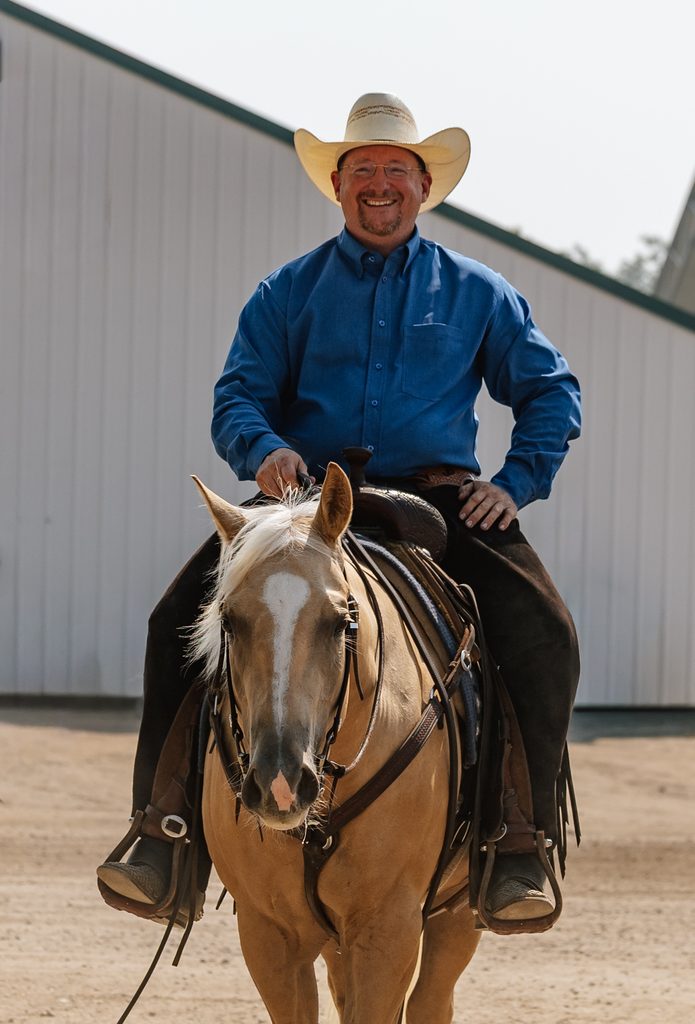
Jamie Birch is the co-founder of EquineRevShare and host of the Equine Business Edge Podcast. Before entering the horse industry, Jamie spent 19 years leading an affiliate marketing agency that worked with hundreds of companies and helped generate more than $3 billion in sales for its clients.
Today, Jamie combines that experience with his life as a horse